What’s the Difference Between Gerunds & Present Participles?
How to make your writing both economical and clear by being sure that each and every pronoun has a clear antecedent.


How to make your writing both economical and clear by being sure that each and every pronoun has a clear antecedent.

How to make your writing both economical and clear by being sure that each and every pronoun has a clear antecedent.
How to make your writing both economical and clear by being sure that each and every pronoun has a clear antecedent.

How to make your writing both economical and clear by being sure that each and every pronoun has a clear antecedent.

How to make your writing both economical and clear by being sure that each and every pronoun has a clear antecedent.
How to make your writing both economical and clear by being sure that each and every pronoun has a clear antecedent.
How to make your writing both economical and clear by being sure that each and every pronoun has a clear antecedent.

How to make your writing both economical and clear by being sure that each and every pronoun has a clear antecedent.
How to make your writing both economical and clear by being sure that each and every pronoun has a clear antecedent.
How to make your writing both economical and clear by being sure that each and every pronoun has a clear antecedent.

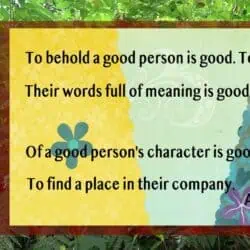
Thomas shares a verse from his new translation of the classical Tamil masterpiece on ethics, power, and love, The Kural: Tiruvalluvar’s Tirukkural, published by Beacon Press.
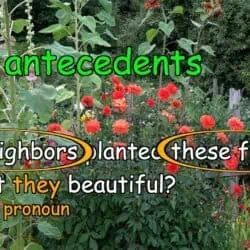
How to make your writing both economical and clear by being sure that each and every pronoun has a clear antecedent.
Thomas answers a question about what part of speech the word SEVERAL is. Here’s a hint: It depends on the sentence!
Marie walks you through an example of how to inflect a verb for the first person, second person, and third person, singular and plural.

Thomas shares a verse from his new translation of the classical Tamil masterpiece on ethics, power, and love, The Kural: Tiruvalluvar’s Tirukkural, published by Beacon Press.
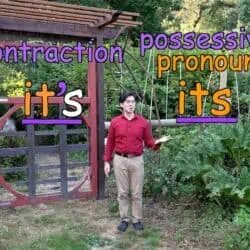
One of the perennial confusions in English is between its and it’s. Here’s a way to remember the difference forever. The key to distinguishing between it’s and its is to remember that it’s, with an apostrophe, is a contraction, and its, without an apostrophe, is a possessive pronoun.